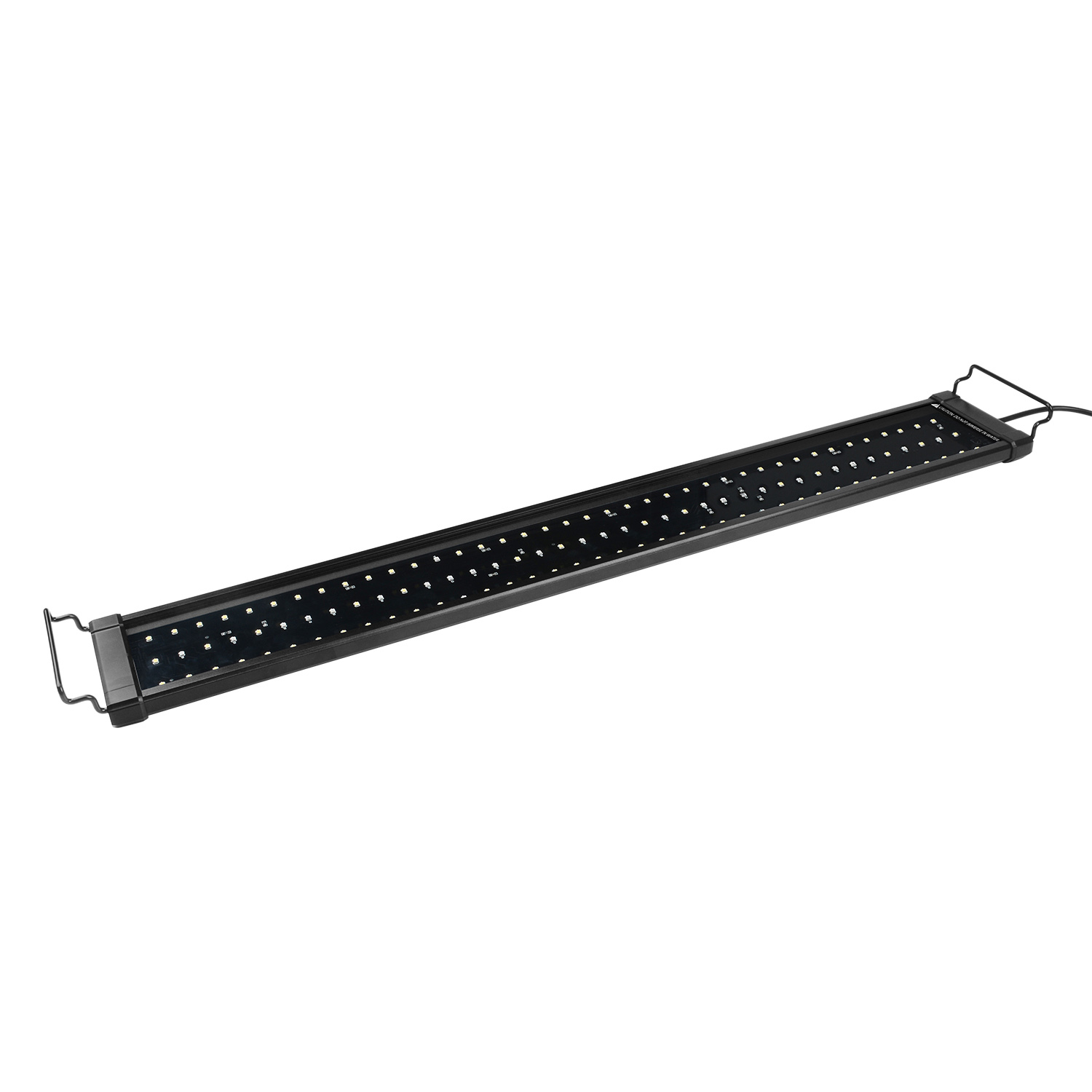
NICREW ClassicLED Plus Review
The default cheap upgrade for a low-tech planted tank: a high-CRI daylight-plus-moonlight bar with a built-in timer, for a fraction of the price of the app-controlled fixtures.
By the AquaVerdict Editorial Team · How we research & review
You'll be sent to Amazon in your country. Indicative price — live, localised pricing coming soon. As an Amazon Associate we earn from qualifying purchases.
Pros
- High CRI (around 91) renders plants and fish colour far better than the cheapest bars
- Two-channel daylight + moonlight with a built-in timer for sunrise/sunset and a night mode
- Extendable brackets fit a range of tank widths
- Genuinely cheap — the easiest low-tech lighting upgrade there is
Cons
- Not enough PAR for a demanding high-tech carpet or deep tank
- No RGB — colour is good for the price but not aquascaping-grade
- Simple on-unit controls, no smartphone app
The cheap upgrade that actually makes sense
Most stock aquarium hoods ship with a weak, blue-tinged light that grows neither plants nor good colour. The NICREW ClassicLED Plus fixes both for around thirty dollars. Its high CRI (~91) makes greens and fish colour look natural, and the two-channel daylight + moonlight design with a built-in timer gives you a proper day cycle and a dim night mode — features that used to cost far more.
Right-sizing your expectations
The trade-off is honest: this is a moderate-output, low-tech light. It will happily grow anubias, java fern, crypts and mosses, but it is not going to power a carpet of demanding red plants in a deep tank — that needs high PAR, CO2 and dosing. Keep it to low-to-medium-light plants, run a 6–8 hour photoperiod on the timer, and remember the golden rule: more light without CO2 and ferts just feeds algae. A little liquid fertiliser from our plant fertilizers guide is all a low-tech tank under this light usually needs.
Where it sits in the range
If you later go high-tech, step up to the Fluval Plant 3.0 or the Chihiros WRGB II Pro 60. For a tiny tank, the NICREW Clip-On Nano Light is the miniature equivalent of this value pick. See the full range on our aquarium lighting hub and match a light to your tank on the aquariums page.
The obvious first upgrade from a stock hood light. Good colour, a real timer and low-tech-friendly output for pocket money — as long as you keep your plants and expectations in the low-to-medium-light lane.
Where this one sits in its aisle
At 30 $, it is the 2 cheapest of the 10 models in this category published here.
- Cheapest in the aisle20 $
- Median130 $
- Dearest in the aisle260 $
NICREW ClassicLED Plus — frequently asked questions
Will low-light plants really grow under this?
Yes — anubias, java fern, crypts, mosses and other low-to-medium-light plants do well under a ClassicLED Plus on a low-tech tank. It is not built for high-light carpets or deep tanks, but for easy plants it is plenty.
Do I still need to watch the photoperiod on a cheap light?
Absolutely. Algae does not care what your light costs. Set the built-in timer to a 6–8 hour photoperiod and keep it consistent — that discipline matters more for algae control than the fixture's price tag.
Low-tech or high-tech — which is this for?
Low-tech. It is a moderate-output light for tanks without CO2, dosing only a bit of liquid fert. If you plan to inject CO2 and chase a red-plant carpet, budget for a higher-PAR fixture instead.
Found your model? Buy it at the right price.
UniverTrack tracks the real price of your aquarium gear across several retailers, spots fake discounts and warns you when it's genuinely the right moment to buy — with an AI assistant to guide you.
Our score
8.0/ 10
The obvious first upgrade from a stock hood light. Good colour, a real timer and low-tech-friendly output for pocket money — as long as you keep your plants and expectations in the low-to-medium-light lane.
Who this one is for
A low-tech 24–30 in planted tank on a budget, where you want healthy easy plants and a set-and-forget timer without spending big.
Compared with its closest rivals
Same category, nearest prices. Only the specifications every one of them states are shown — a half-empty column compares nothing.
| Model | Price | Type | Length / size options | Spectrum | Control |
|---|---|---|---|---|---|
| NICREW ClassicLED Plus | 30 $ | Two-channel LED bar (daylight + moonlight) | 12–18 / 18–24 / 24–30 / 36–48 / 48–54 in (this is 24–30 in) | White + RGB accent LEDs, high CRI ~91, plus blue moonlight | Built-in timer, daylight/moonlight cycle, brightness adjustable |
| NICREW Clip-On Nano Light | 20 $ | Clip-on / clamp nano LED, gooseneck | Single clip unit for nano tanks (up to ~10 gal) | White, blue and red LEDs, 2 lighting modes | On-unit modes; add an external plug-in timer |
| NICREW SkyLED Plus | 40 $ | Full-spectrum LED with external controller | Multiple lengths (this is the 30–45 cm / 12–18 in, 11 W) | Adjustable white, red, green, blue channels | Wired controller, built-in timer, 6 ramp options |
| Hygger Advanced 24/7 LED | 60 $ | Full-spectrum LED bar (white + RGB), wired controller | 18–24 / 24–30 / 30–36 / 48–54 in (this is 18–24 in) | 6500K white + full-spectrum RGB | Wired controller, 24/7 auto cycle, DIY mode, built-in timer |
What separates these models
- If price decides: NICREW Clip-On Nano Light, at 20 $.
- Highest Length / size options in the table: NICREW SkyLED Plus (Multiple lengths (this is the 30–45 cm / 12–18 in, 11 W)).
If this one is not the right fit
- On a tighter budget: NICREW Clip-On Nano Light, at 20 $ in the same category. see the review
Guides that feature it
Price and availability
Details checked on July 15, 2026.
Sources
Specifications: manufacturer sheet and Amazon product page. Prices and availability: Keepa. No product on this site has been physically tested.
More lighting we recommend
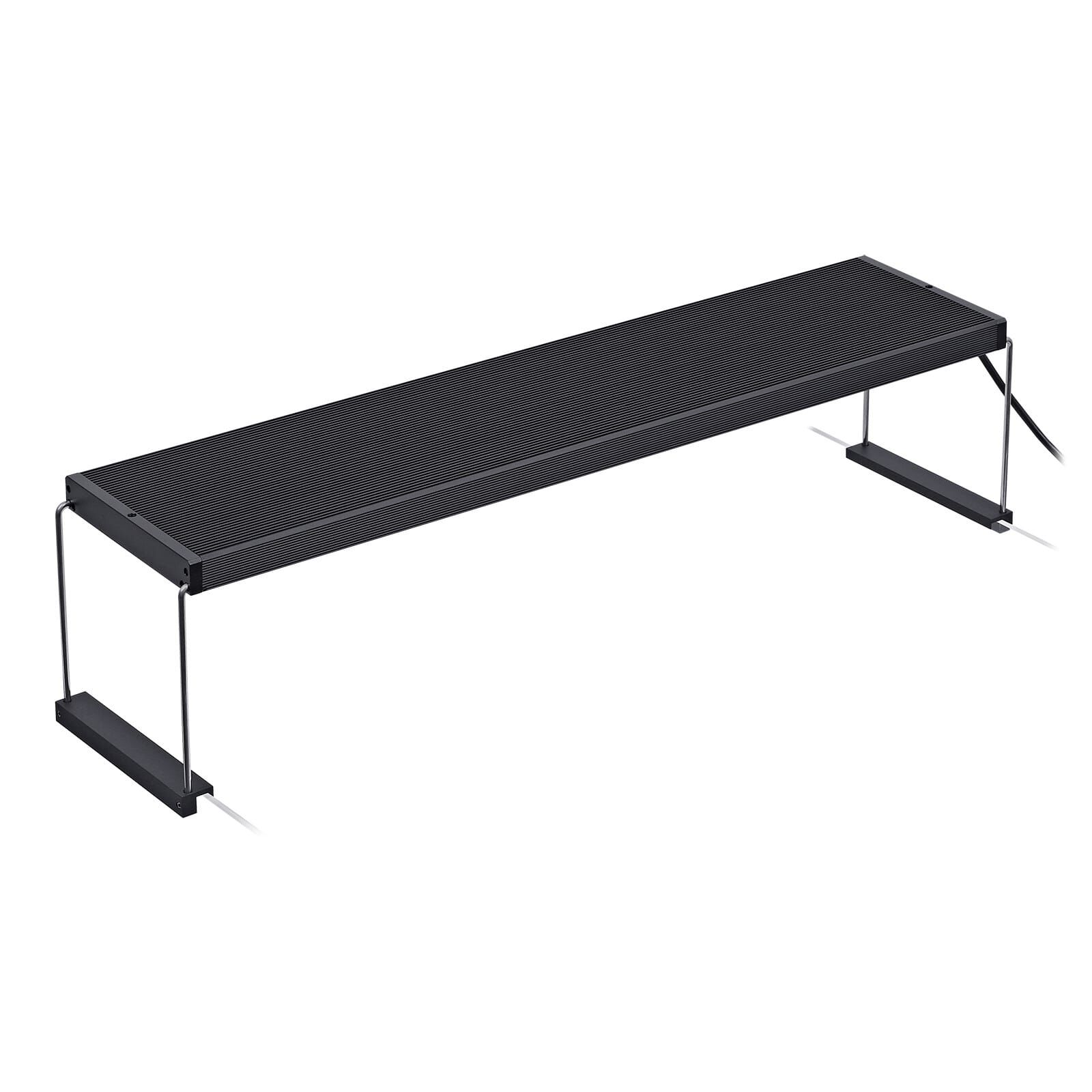
CHIHIROS · 60 cm · full-spectrum RGB · high-tech planted
Chihiros WRGB II Pro 60
The aquascaper's default: a bright, individually-tuned full-spectrum RGB fixture with app control and enough PAR to run a demanding, CO2-injected carpet on a 60 cm tank.
Read the review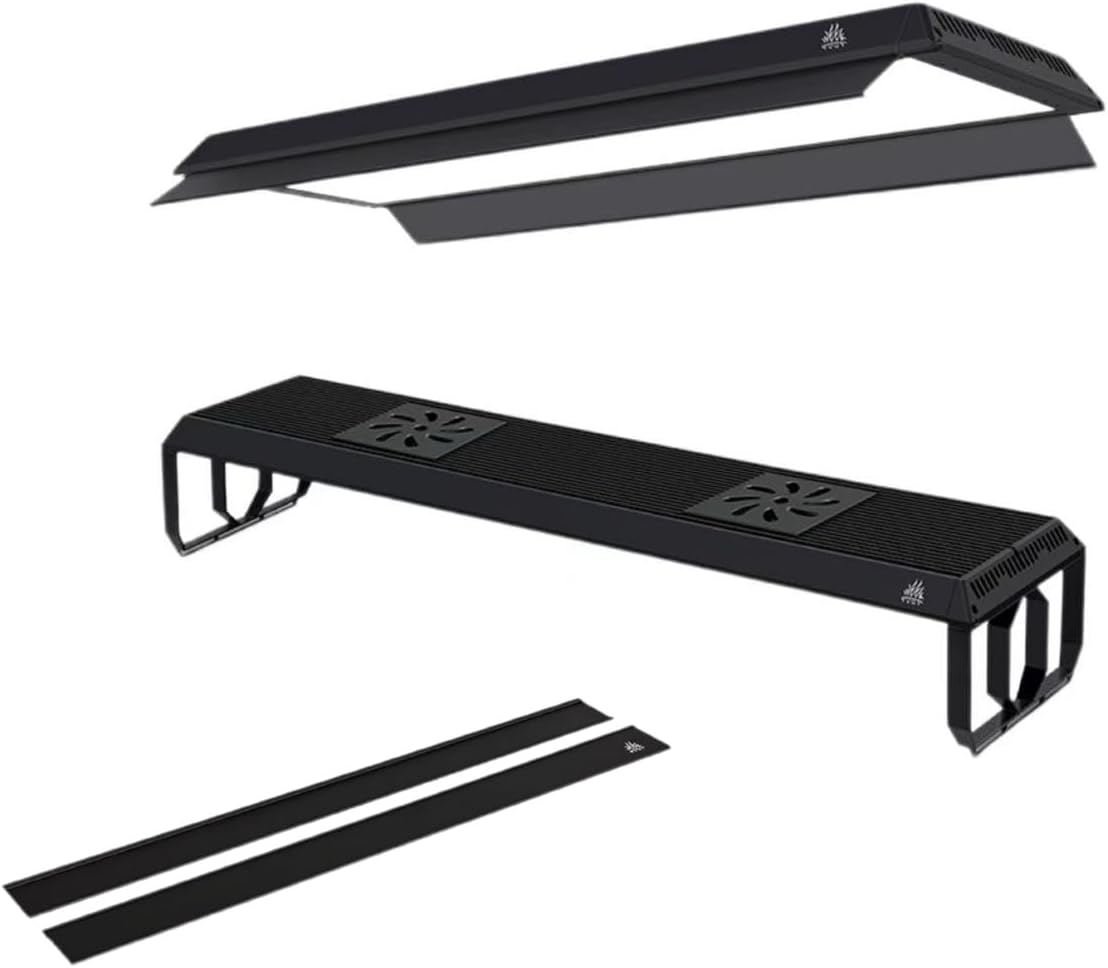
WEEK AQUA · 90 cm · RGB+UV full-spectrum · high-tech planted
Week Aqua P900 Pro
A high-output RGB+UV panel with app control aimed squarely at serious aquascapers: exceptional colour rendition, huge PAR and a UVA channel that makes reds and greens genuinely glow.
Read the review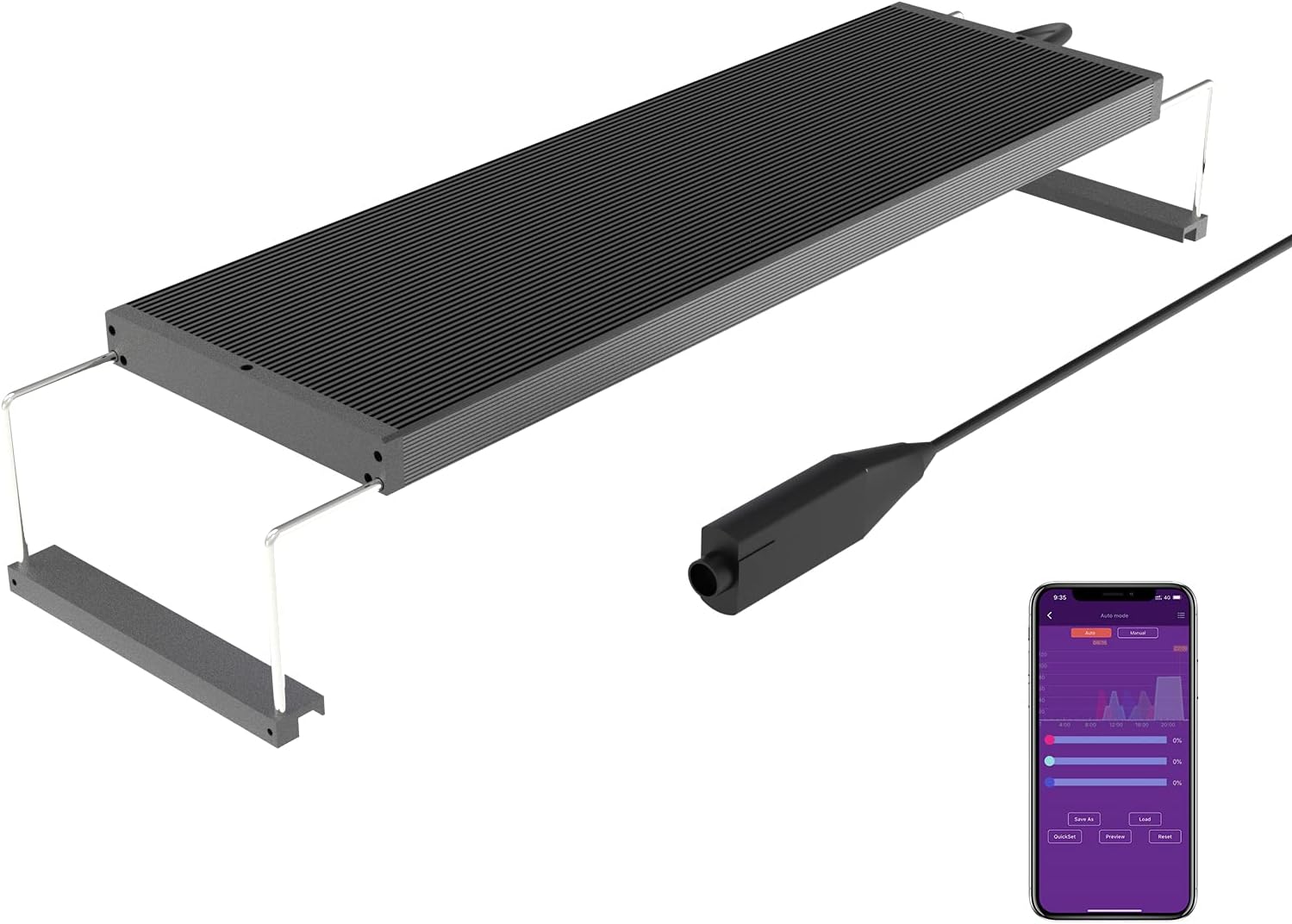
CHIHIROS · 45 cm · full-spectrum RGB · planted
Chihiros WRGB II 45
The non-Pro WRGB II: the same tunable red-green-blue-white LEDs and app control that made Chihiros the aquascaper's default, in a cheaper 45 cm fixture with slightly lower peak output.
Read the review