The best aquarium air pumps for 2026
A good air pump adds oxygen, drives sponge filters and keeps the surface moving. We rank pumps on noise (the thing owners regret most), output and reliability, and help you size one correctly for single or multiple tanks.
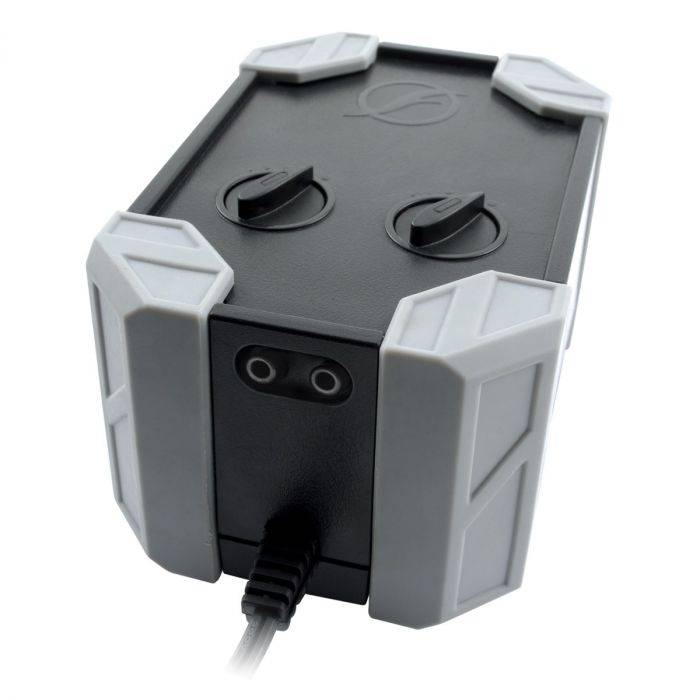
FLUVAL · dual outlet · up to 600 L / 160 gal · adjustable
A402
A serious twin-outlet pump with an independent flow dial on each side, so one unit can quietly run two tanks — or two sponge filters — up to 600 litres. The powerhouse of our air-pump picks.
Read the review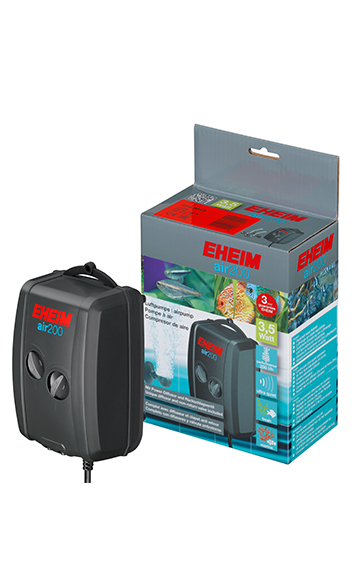
EHEIM · 2 outlets · up to 300 L / 60 gal · very quiet
Air Pump 200
Eheim's take on the air pump: a rubber-sheathed twin-outlet unit engineered to be near-silent, and sold as a complete kit with diffusers, airline and check valves. The one to buy if noise is the deal-breaker.
Read the review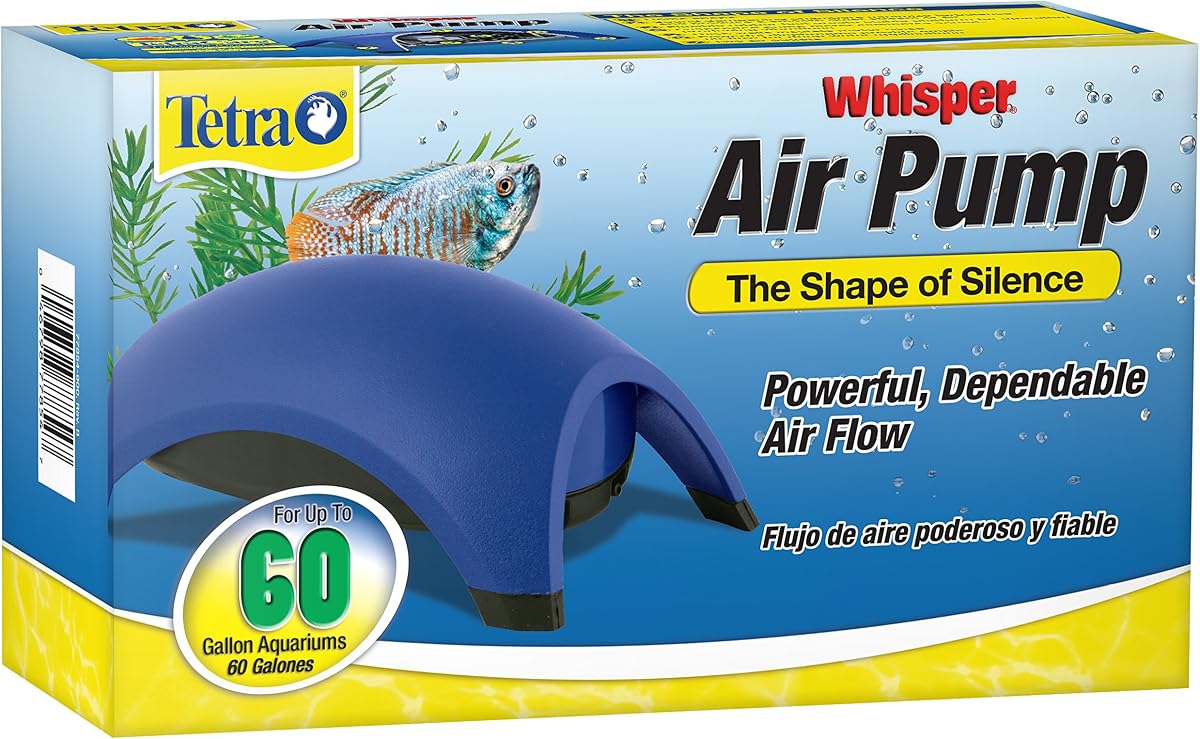
TETRA · dual outlet · 40–60 gal (150–230 L) · quiet dome
Whisper 60
The big brother of the Whisper 40: the same suspended-motor dome design, but with two outlets and enough push for a 40–60 gallon tank or two air lines at once.
Read the review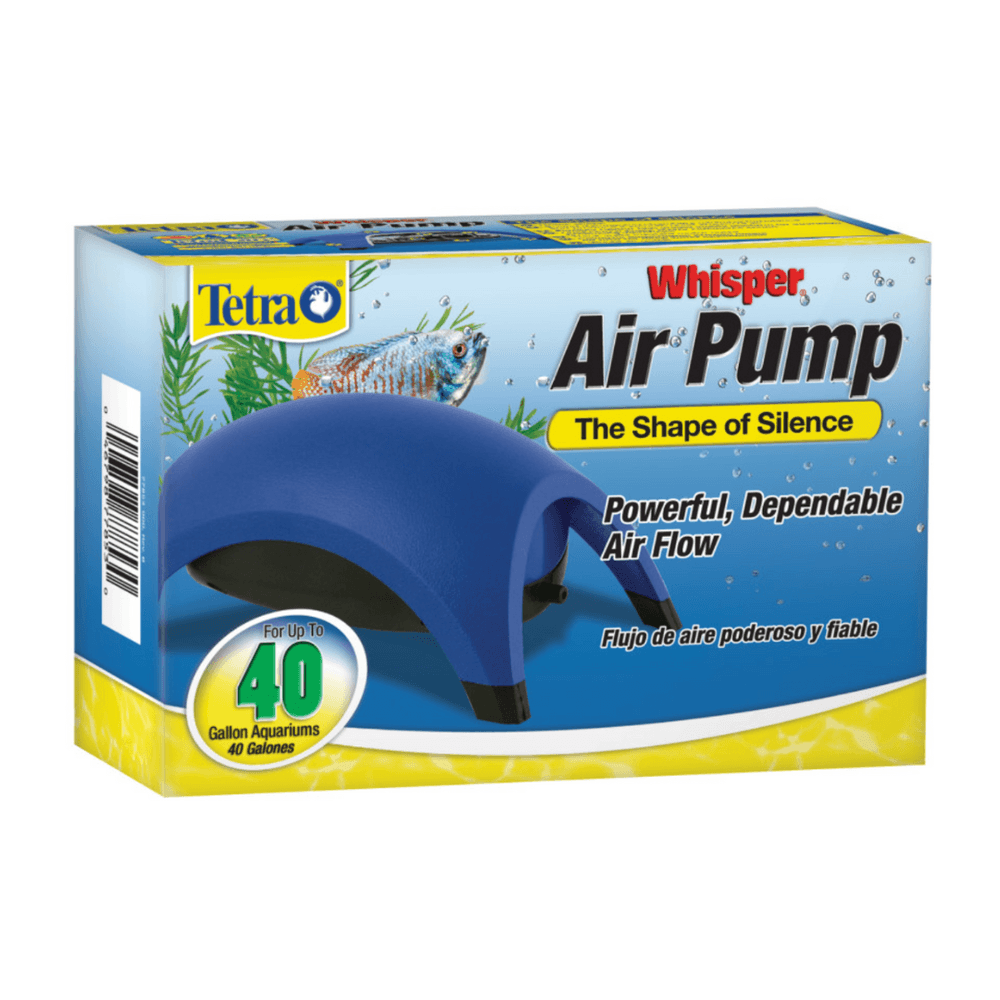
TETRA · single outlet · 20–40 gal (75–150 L) · quiet dome
Whisper 40
The default air pump most keepers reach for: cheap, widely stocked and genuinely quiet thanks to Tetra's suspended-motor dome design. One outlet, enough push for a 20–40 gallon tank.
Read the review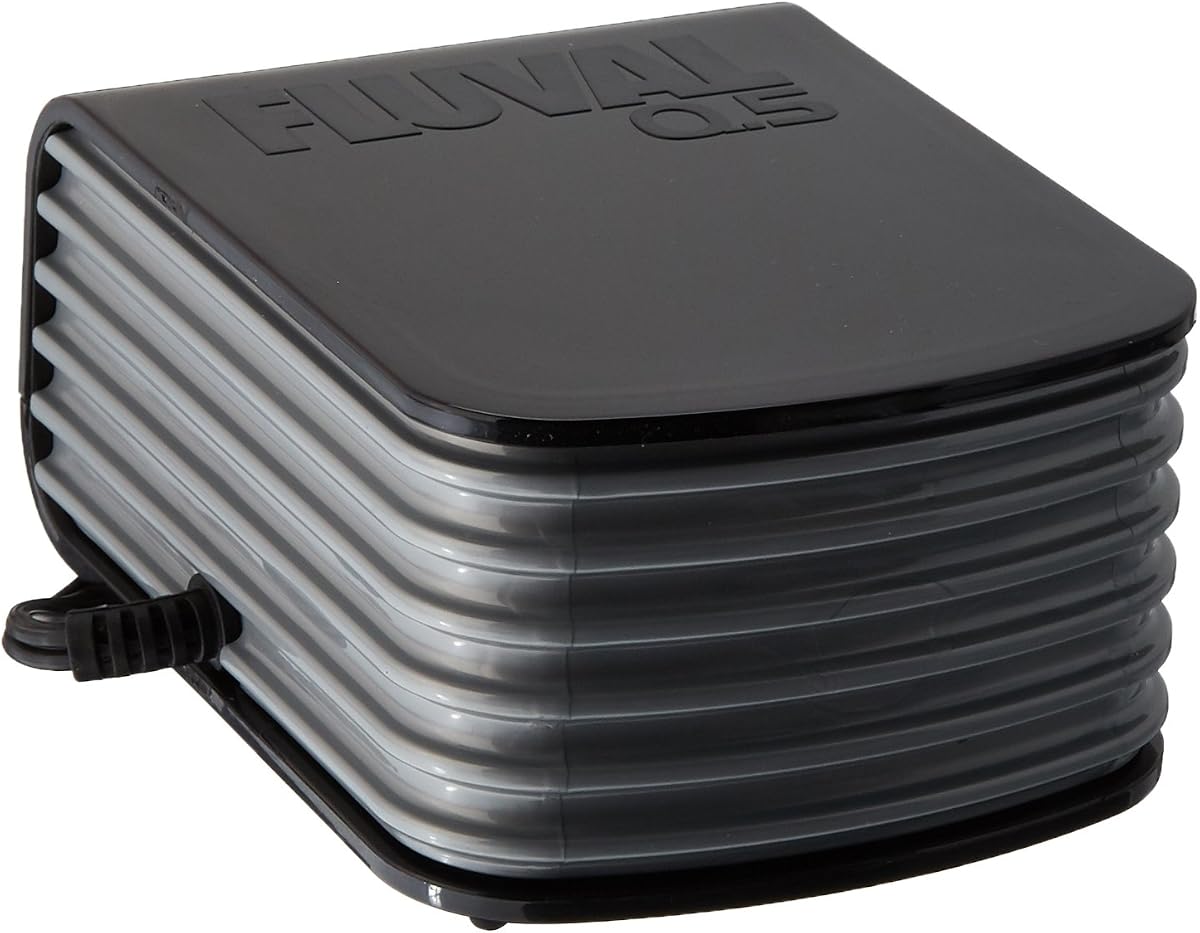
FLUVAL · single outlet · up to 45 gal (170 L) · suspended motor
Q.5
The smallest of Fluval's Q series: a well-built, seriously quiet single-outlet pump with a suspended motor and swappable service module. A step up in refinement from the budget crowd.
Read the review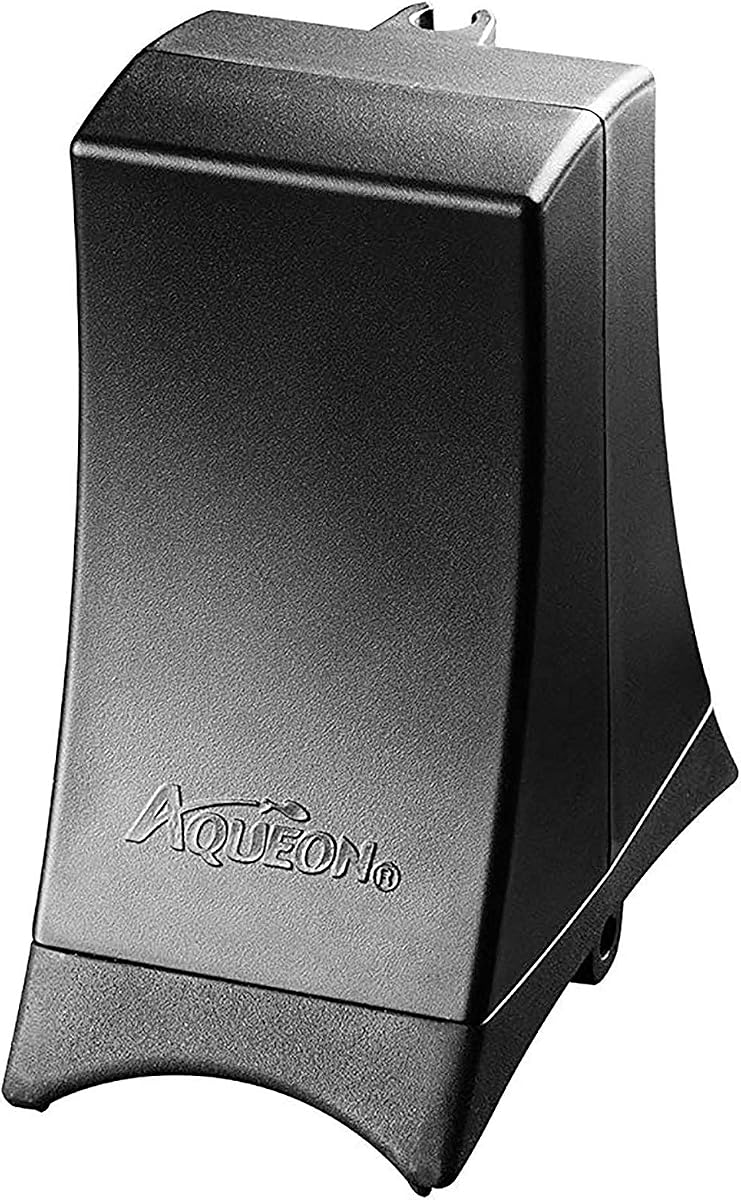
AQUEON · single outlet · 11–20 gal (40–75 L) · built-in check valve
QuietFlow 20
A neat upright air pump for small-to-mid tanks with two things most rivals leave out: an integrated check valve and a vertical body that resists airline kinks. Cheap and quiet enough.
Read the review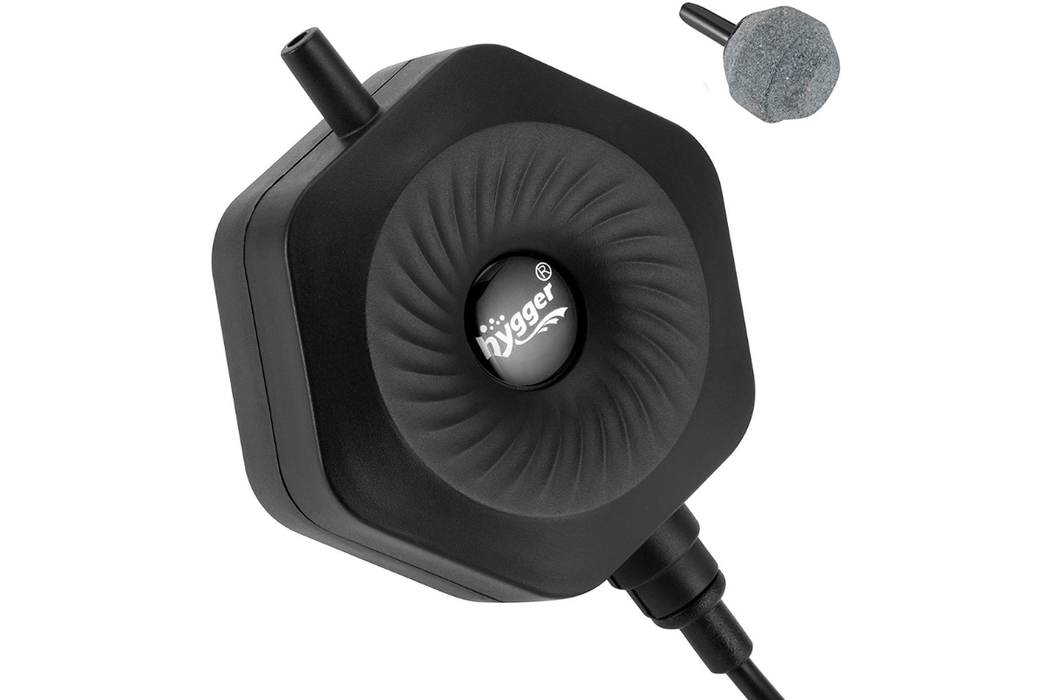
HYGGER · all-in-one kit · 0.5–15 gal · single outlet · 1.5 W
Hexagon Mini Air Pump
A pocket-sized 1.5 W pump that comes with the air stone, tubing and clip in the box — grab-and-go aeration for a nano. Quiet, low-power and genuinely all-in-one.
Read the review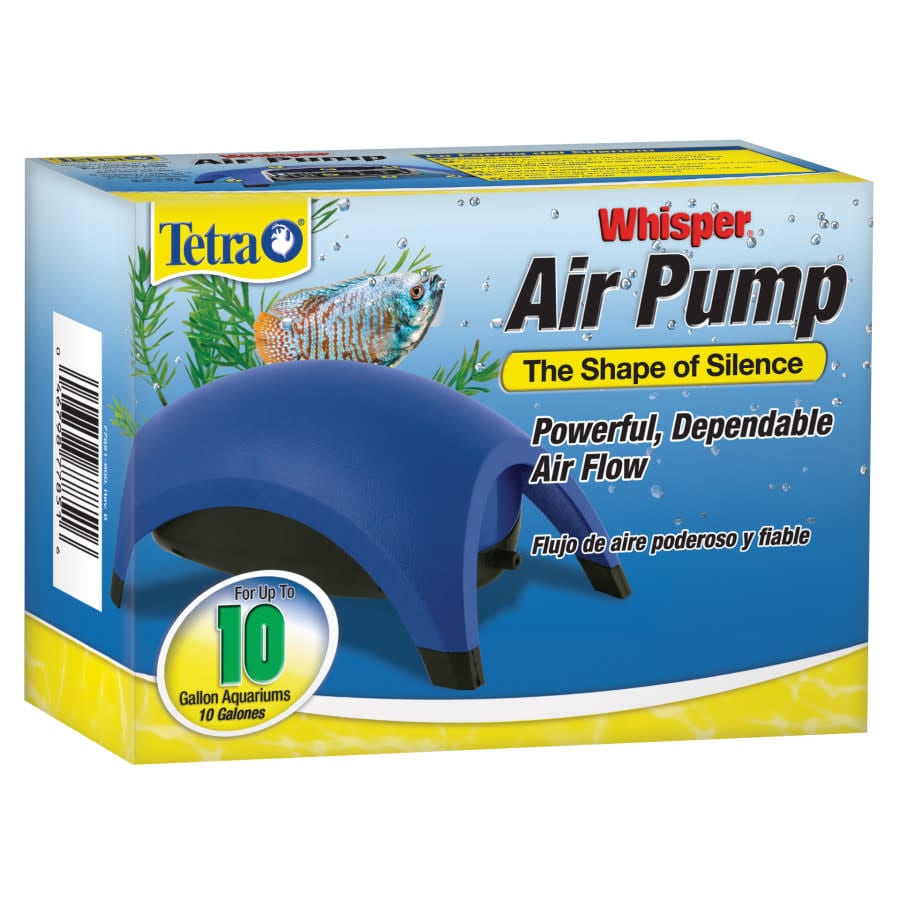
TETRA · single outlet · up to 10 gal (38 L) · nano
Whisper 10
The smallest Whisper: a tiny, cheap, single-outlet pump that is exactly enough air for a nano or a shrimp tank without swamping it. Quiet dome design in pocket size.
Read the review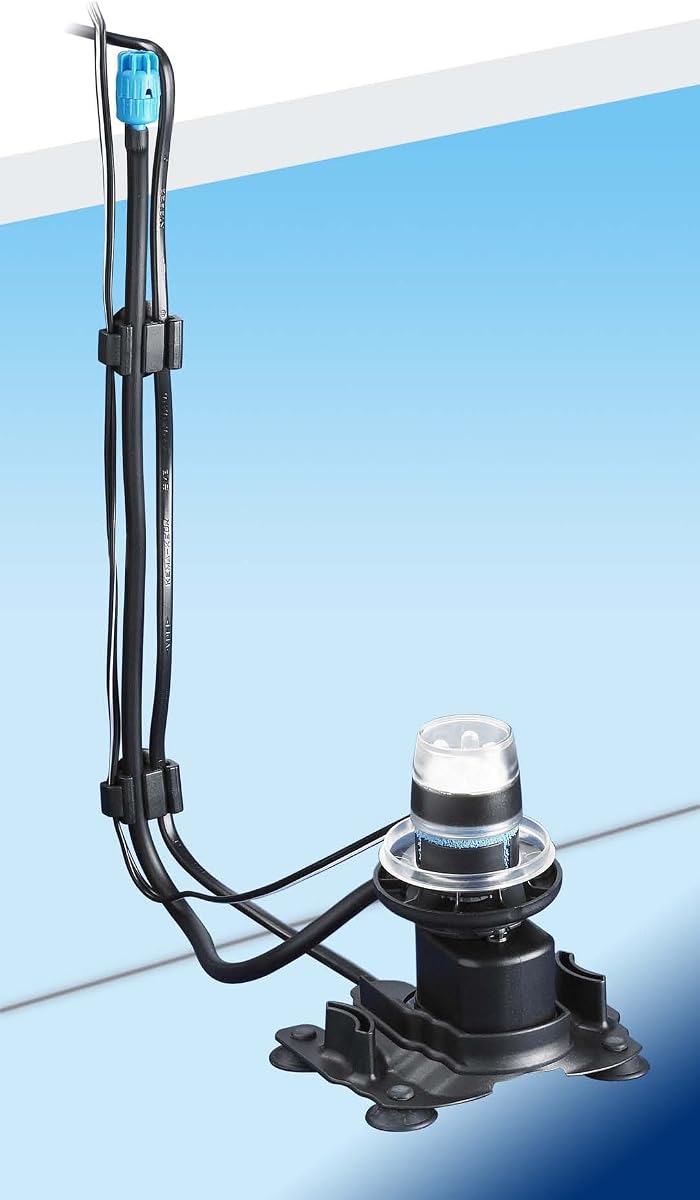
HYDOR · in-tank venturi aerator · 13–26 gal (50–100 L) · LED
Ario 2
A different take on aeration: a submersible venturi pump that sits inside the tank and pulls air down a thin tube, so there is no diaphragm buzz — plus an LED-lit bubble column for effect.
Read the review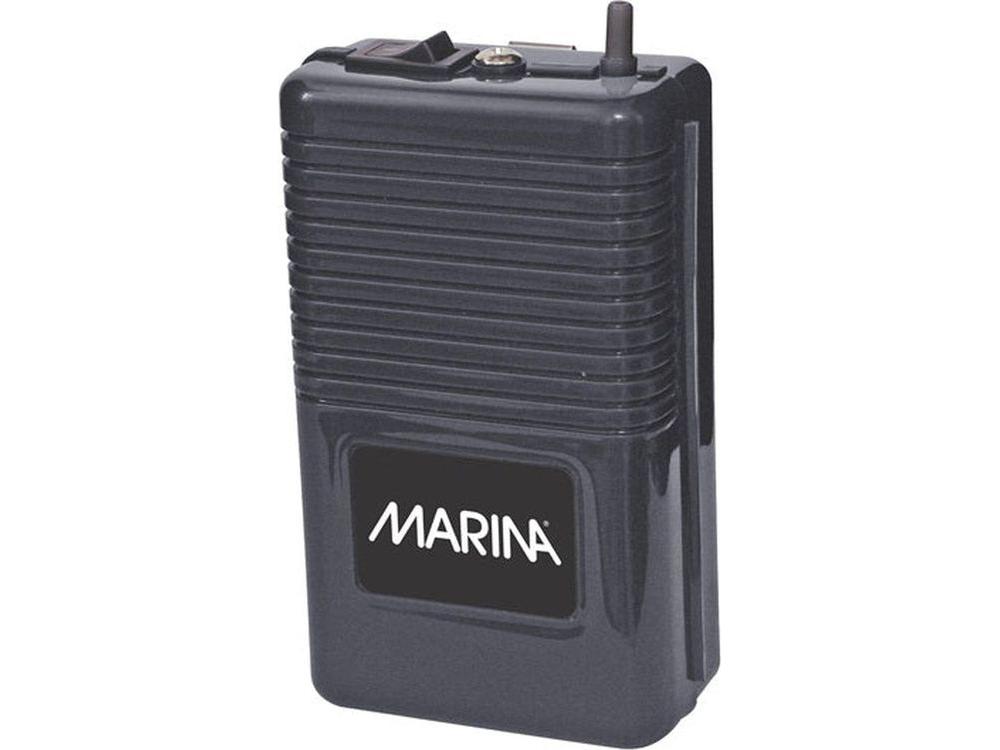
MARINA · battery backup · 2×D cells · single outlet
Battery-Operated Air Pump
Not your main pump — your insurance policy. Runs on two D batteries to keep water oxygenated during a power cut or while transporting fish, and comes with an air stone and tubing ready to go.
Read the reviewFound your model? Buy it at the right price.
UniverTrack tracks the real price of your aquarium gear across several retailers, spots fake discounts and warns you when it's genuinely the right moment to buy — with an AI assistant to guide you.
Which one for which need
Running several tanks or diffusers
The number of outlets decides what a single pump can drive: a diffuser, a sponge filter, an ornament, or several tanks at once.
A single discreet diffuser
A one-outlet pump is ample for one tank and is usually quieter than an oversized model throttled down.
Who each type suits
- Heavily stocked tank
- Surface agitation is what actually drives gas exchange. An air pump contributes more through the movement it creates than through the bubbles themselves.
- Breeding or quarantine tank
- A sponge filter driven by an air pump draws in no fry and can be sterilised between uses. It is the classic arrangement.
- Summer and heatwaves
- Warmer water holds less oxygen. An air pump then becomes a genuine safeguard rather than an accessory.
The trade-offs to weigh
- Output against noise
- A powerful pump vibrates and is audible in a quiet room. Standing it on something soft changes the perceived noise more than changing model does.
- Bubbles against CO2
- Surface agitation drives off dissolved CO2. In a CO2-injected tank, an air pump running by day undoes part of the diffuser's work.
- Multiple outlets against pressure
- Splitting air across several outlets reduces pressure at each. A manifold with taps lets you balance them, but it does not create output.
Questions buyers ask
Is an air pump essential?
Not if the filter already agitates the surface. It becomes useful on a heavily stocked tank, in summer, or to run a sponge filter.
Do bubbles actually oxygenate the water?
Little directly: it is the surface agitation they cause that drives gas exchange. A well-aimed filter outlet does the same job.
Do I need a check valve?
Absolutely, if the pump sits below the water line. Without one, a power cut siphons the tank into the pump.
How do I reduce the noise?
Stand the pump on foam or hang it, away from the cabinet that acts as a sounding board. That works better than changing model.
Can I use it with CO2?
It drives off dissolved CO2. Many people run it only at night, when CO2 is switched off anyway.
Should it run continuously?
On a stocked tank, yes. A pump running intermittently only helps while it is running.
Do air stones wear out?
They clog and produce progressively coarser bubbles. They are a consumable costing a few euros.
How long should the tubing be?
As short as possible: every extra metre costs pressure, especially on small pumps.
What to remember
It is not the bubbles that oxygenate but the surface agitation they create — a well-aimed filter outlet often does the same job. A check valve is mandatory as soon as the pump sits below the water line, and the pump goes on foam, not inside the cabinet.