The best aquarium heaters for 2026
A reliable heater keeps tropical fish safe through the seasons. We compare heaters on temperature accuracy, build safety (shatter-resistant, auto shut-off) and value, and show you exactly how many watts you need for your tank size and room temperature.
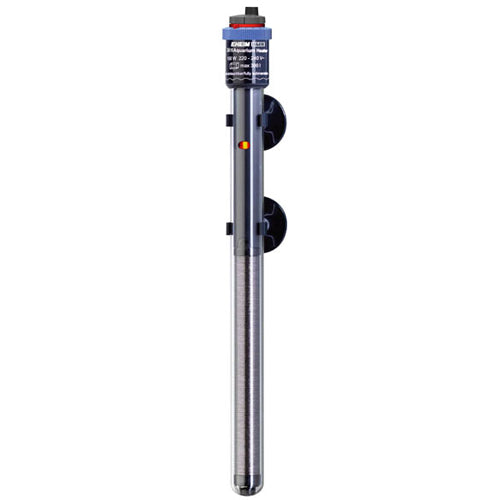
EHEIM · 150 W · up to ~200 L · glass thermostat
Eheim Jager 150W
The benchmark German glass thermostat heater: accurate, repairable and near bomb-proof. It is the reliable classic every keeper compares the rest against.
Read the review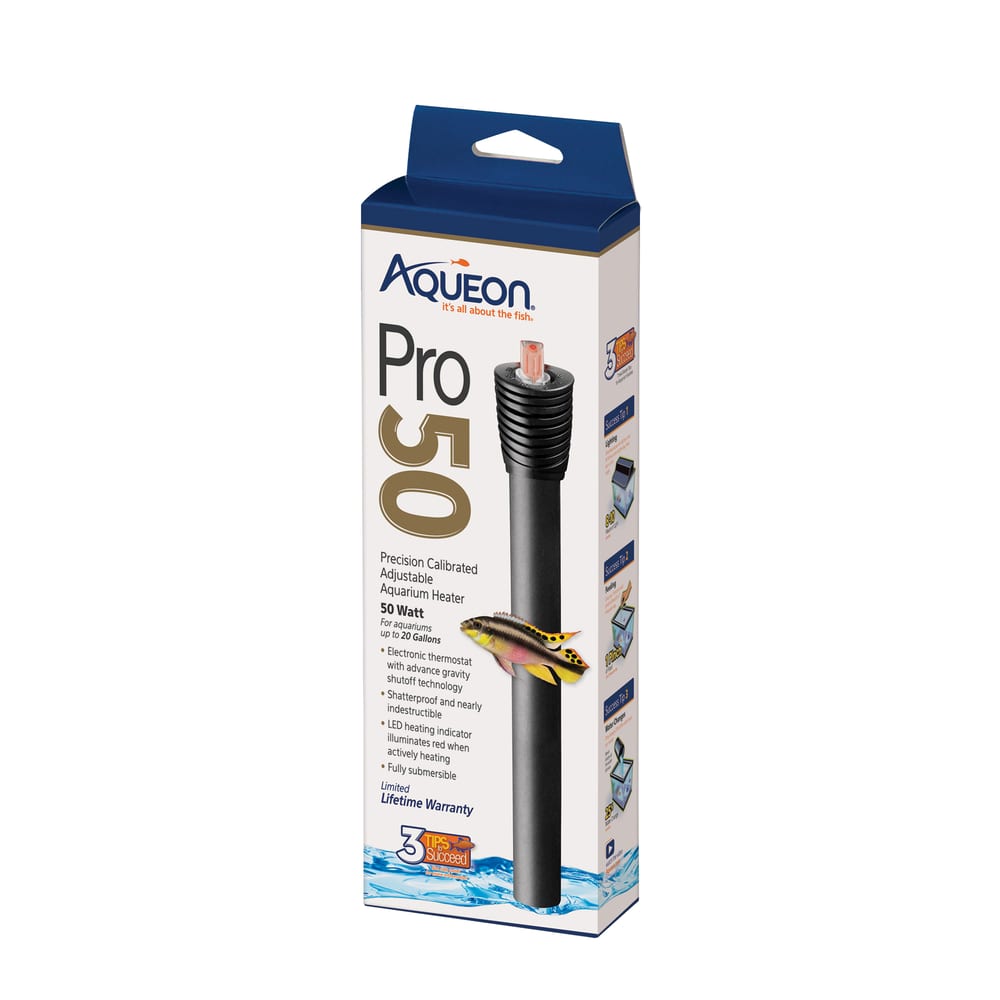
AQUEON · 100 W · up to ~100 L · shatterproof
Aqueon Pro 100W
The tough, cheap heater the whole hobby recommends: a shatterproof thermoplastic body, an accurate adjustable thermostat and an auto shut-off if it is ever run dry. Peace of mind for very little money.
Read the review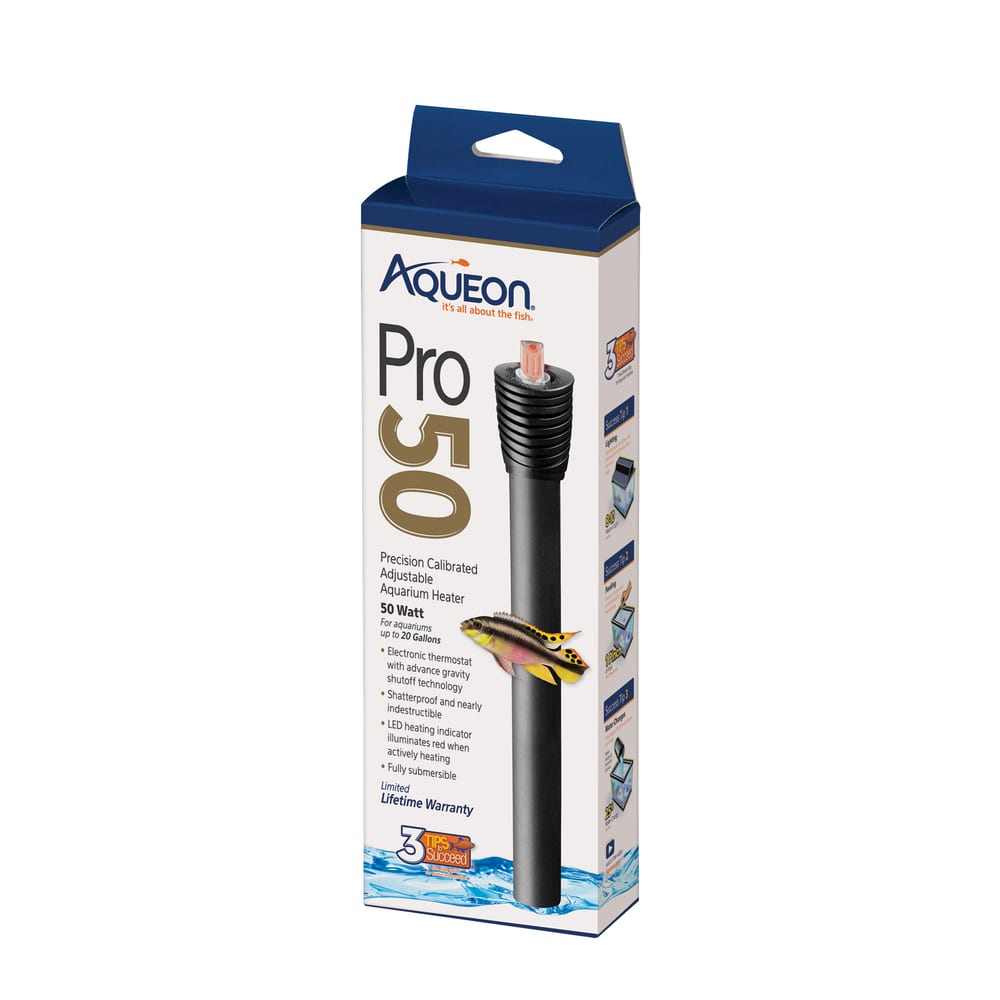
AQUEON · 150 W · up to ~210 L · shatter-resistant
Aqueon Pro 150W
A tough, shatter-resistant heater with an electronic thermostat at a genuinely low price — the sensible default when you want durability over gadgets.
Read the review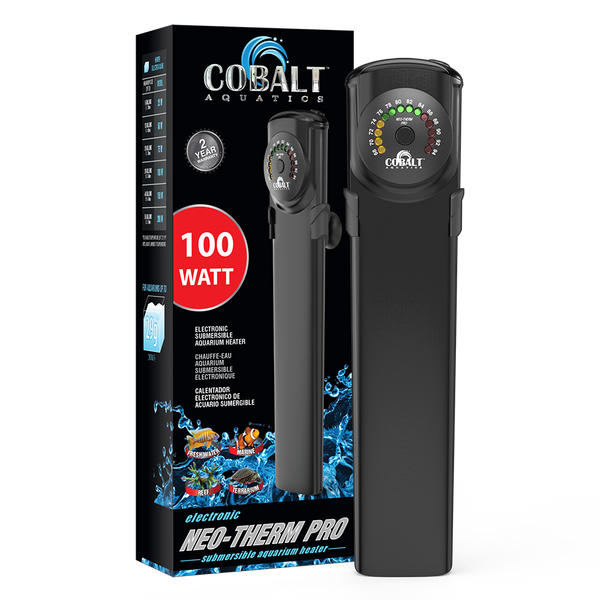
COBALT AQUATICS · 100 W · up to ~100 L · slimline LED
Cobalt Neo-Therm Pro 100W
A flat, shatterproof heater barely thicker than a phone, with an LED read-out and a tightly-controlled electronic thermostat. It hides against the glass and holds temperature to within half a degree.
Read the review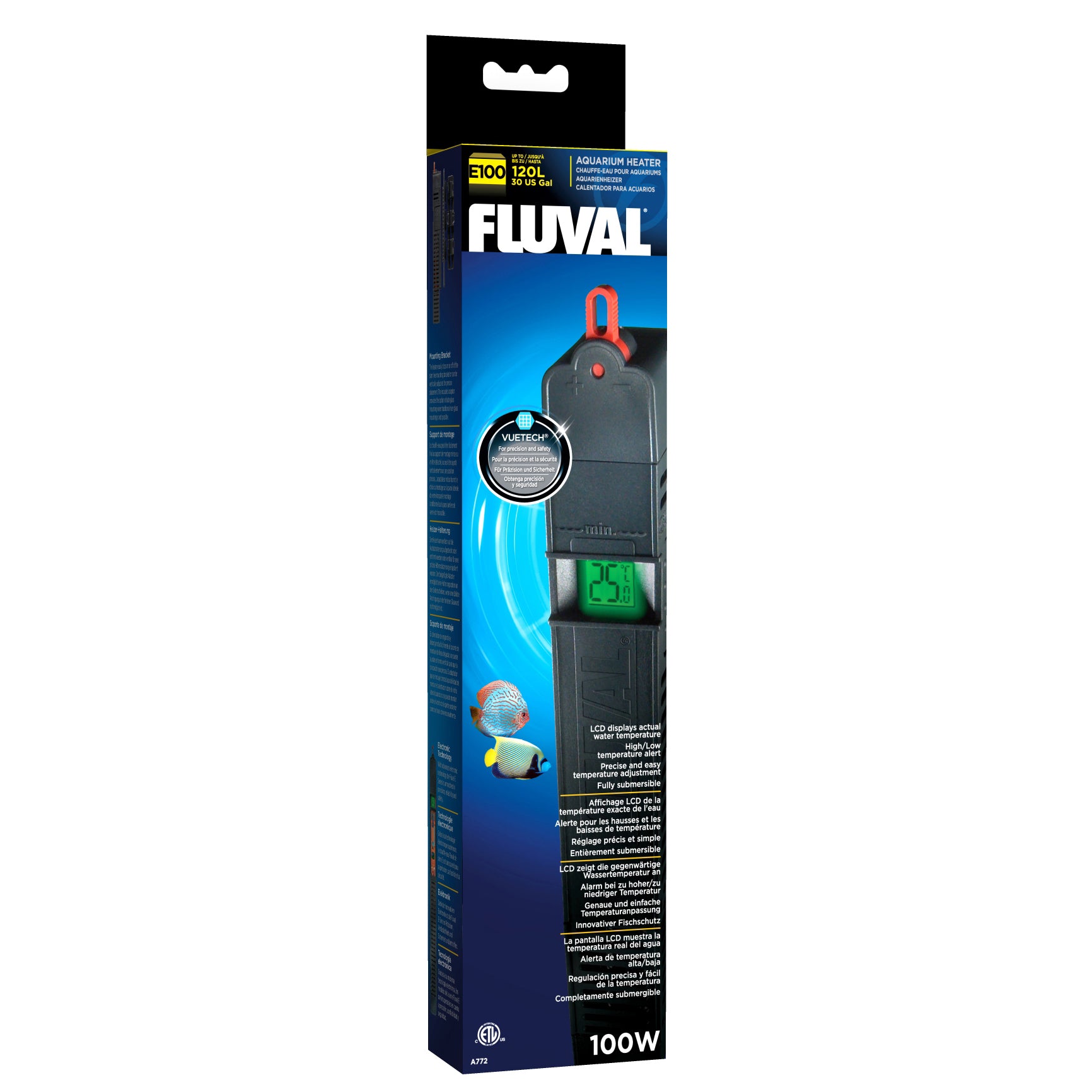
FLUVAL · 100 W · up to ~100 L · digital display
Fluval E100
The smallest of Fluval's E-series: a dual-sensor electronic heater with an LCD screen that shows the real water temperature and flashes an alert if it drifts. Reassurance you can read at a glance.
Read the review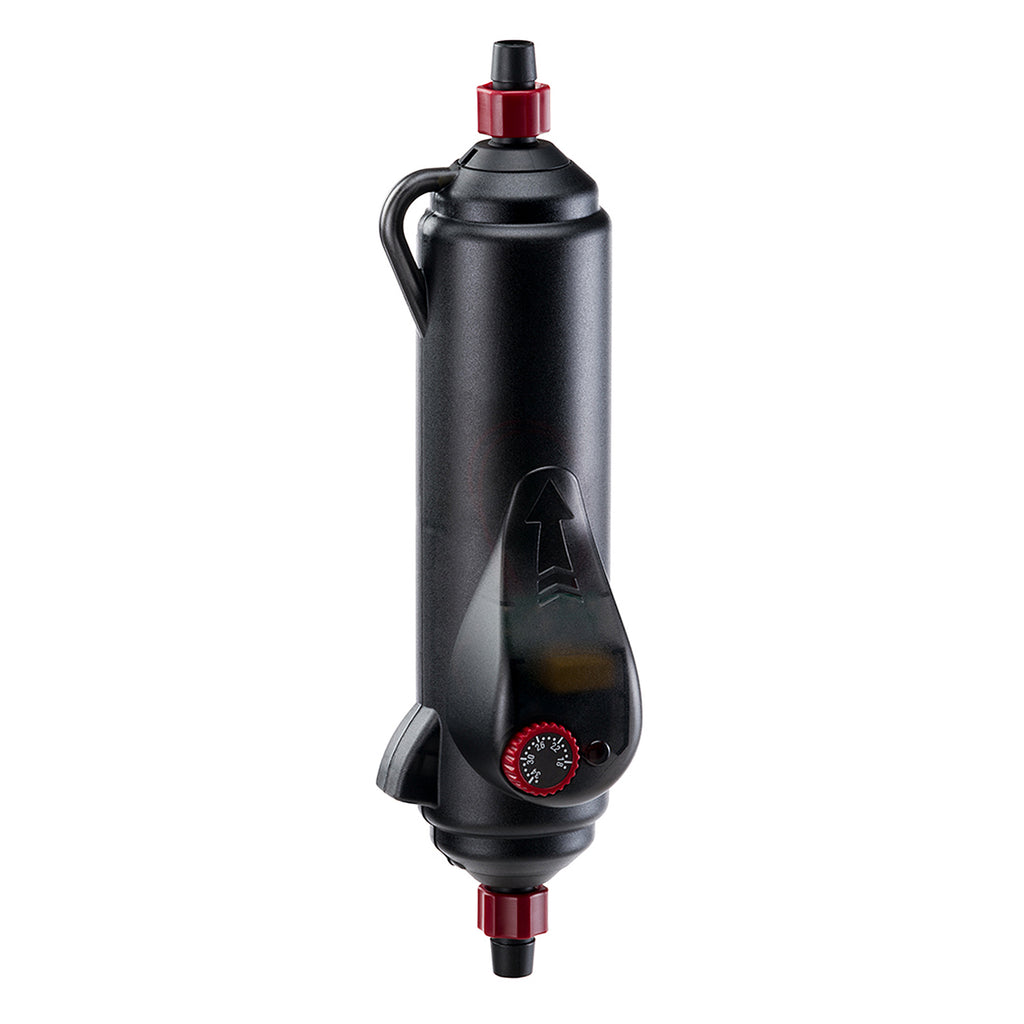
HYDOR · 200 W · inline · fits canister hose
Hydor ETH 200 Inline
An external heater that clips into your canister filter's return hose, warming water as it flows back — so nothing hangs inside the tank at all.
Read the review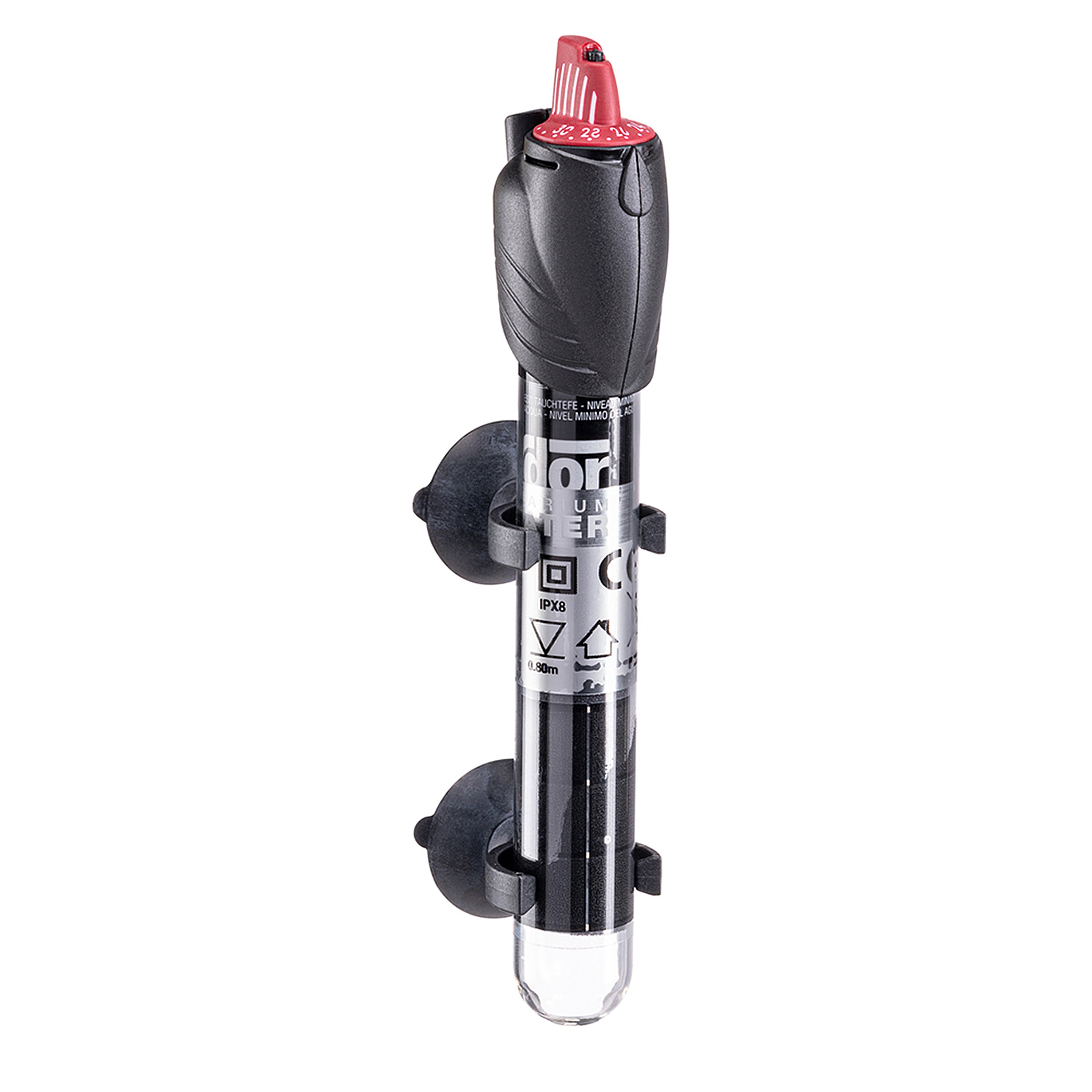
HYDOR · 200 W · up to ~200 L · shatter-resistant
Hydor Theo 200W
A no-nonsense Italian-made submersible heater with a PTC ceramic core and a shatter-resistant body. Plain, accurate and cheap — the quiet workhorse for a mid-size tank.
Read the review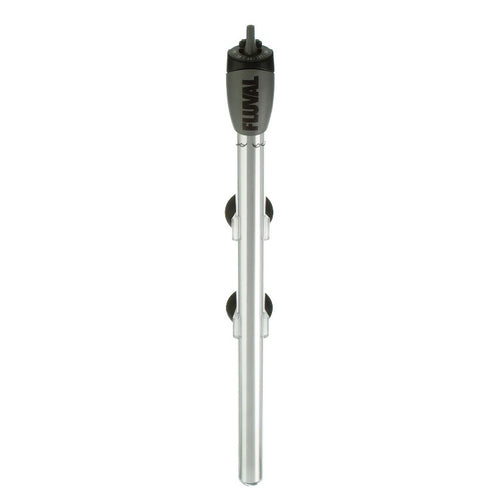
FLUVAL · 50 W · up to ~57 L · nano glass heater
Fluval M50
A slim, mirror-finished nano heater that all but disappears in a small planted tank — accurate, compact and easily the most discreet heater we cover.
Read the review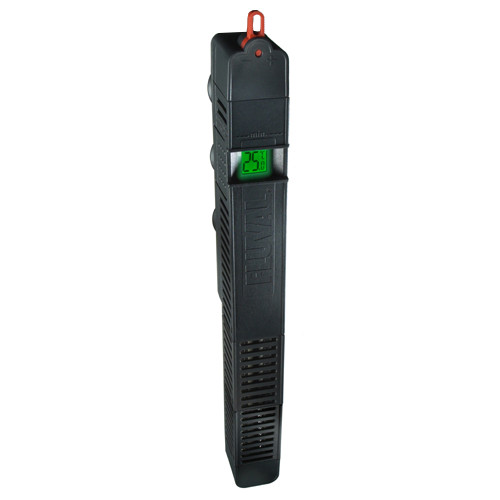
FLUVAL · 200 W · up to 250 L · electronic + LCD
Fluval E200
An electronic heater that actually talks to you: a real-time LCD, dual temperature sensors and on-screen alerts if the water runs too hot, too cold or too low.
Read the review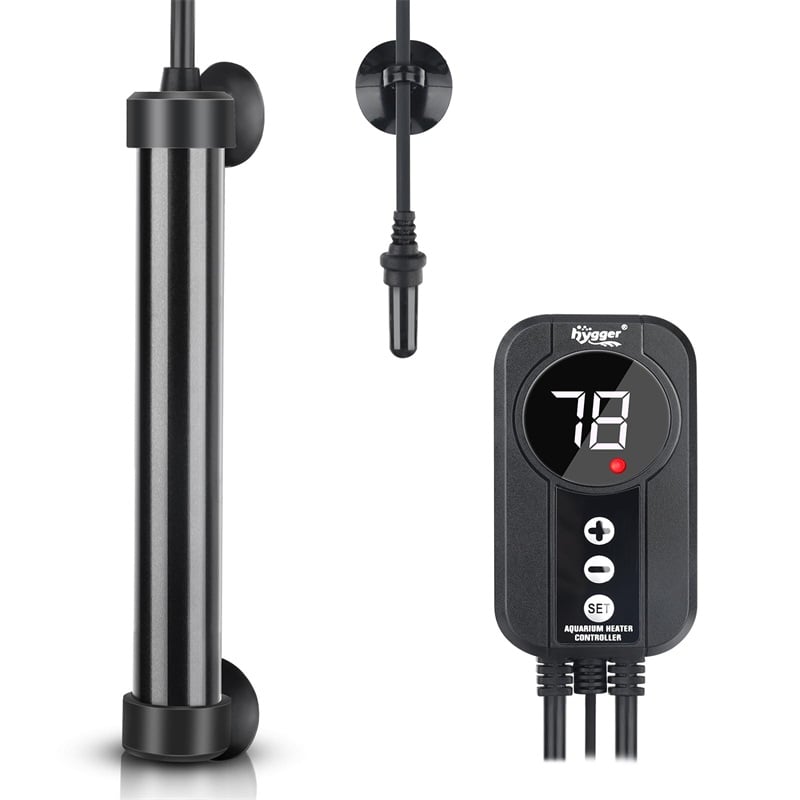
HYGGER · 200 W · up to ~170 L · titanium + external controller
Hygger 200W Titanium Heater
A titanium heating tube with a separate digital controller that keeps the temperature read-out and thermostat outside the tank — remarkable value for a shatterproof metal heater.
Read the reviewFound your model? Buy it at the right price.
UniverTrack tracks the real price of your aquarium gear across several retailers, spots fake discounts and warns you when it's genuinely the right moment to buy — with an AI assistant to guide you.
Which one for which need
Heating a large tank
The wattage needed depends on volume and on the gap with room temperature. Undersized, the heater runs constantly and wears out fast.
Equipping a small volume
An overpowered heater in a small tank swings the temperature on every cycle, which is more dangerous than a slightly weak one.
Following the manufacturer's guidance
The recommended volume gives a sound starting point for a normally heated room.
Who each type suits
- Standard tropical tank
- A correctly sized heater holds a steady temperature without ever running continuously. Stability matters more than the exact value.
- Cold room
- A living room at 16 °C in winter needs considerably more power than one at 20 °C. The gap to close is the real criterion, not volume alone.
- Safety
- An independent thermometer is essential: thermostats drift, and nothing else warns you before the fish react.
The trade-offs to weigh
- Power against swings
- An oversized heater climbs fast and overshoots, creating oscillations. A correctly sized one holds a steadier temperature.
- One large heater against two small ones
- Two heaters spread the heat and give you a safety margin if one fails. They cost more and take up two visible positions.
- Stated accuracy against reality
- Graduated dials are indicative and drift over time. Only a separate thermometer tells you the tank's actual temperature.
Questions buyers ask
What wattage should I choose?
It depends on volume and above all on the gap between the target temperature and the room. A cold room needs noticeably more power at the same volume.
Can I trust the built-in thermostat?
Not on its own. An independent thermometer is the only way to know what is actually happening, and a drifting thermostat gives no warning.
Can I take the heater out during a water change?
Unplug it and wait for it to cool before lifting it out. A hot heater taken out of water can crack or even shatter.
Are two heaters better than one?
On a large tank, yes: heat spreads more evenly and a failure does not drop the whole temperature at once.
Should the heater run all the time?
No. If it never switches off it is undersized, or the room is too cold. That is a sign not to ignore.
Where should it go in the tank?
Near a filter outlet, in the current, so the heat distributes. A heater in a dead corner creates a local hot spot.
Do I need a heater in summer?
It still guards against night-time drops. In a heatwave the opposite becomes the problem, and a surface fan is more use.
How long does a heater last?
A few years, with the thermostat drifting progressively. It is a part to watch and replace before it fails outright.
What to remember
Wattage follows the gap to close with the room, not volume alone, and a heater that never switches off is undersized. An independent thermometer is essential: it is the only witness to a thermostat quietly drifting.