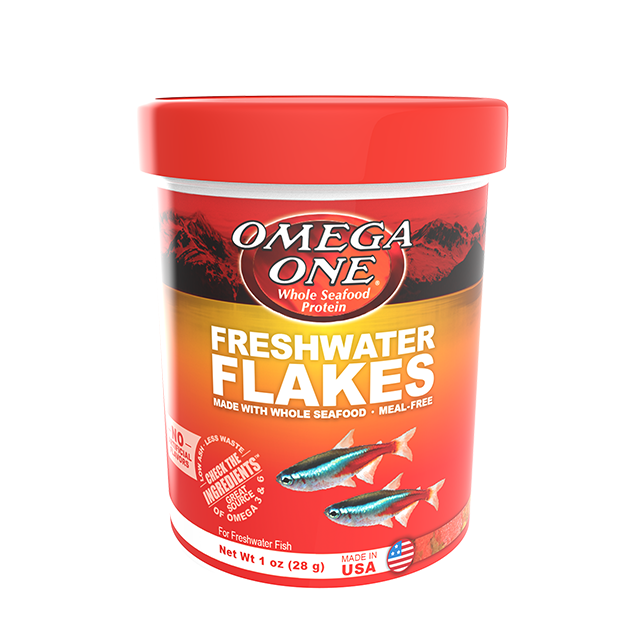
Omega One Freshwater Flakes Review
A flake built from whole fresh seafood rather than meals, so it is rich in natural pigments that bring out reds and oranges — and it clouds the water noticeably less than most flakes.
By the AquaVerdict Editorial Team · How we research & review
You'll be sent to Amazon in your country. Indicative price — live, localised pricing coming soon. As an Amazon Associate we earn from qualifying purchases.
Pros
- Made from whole fresh seafood, so natural astaxanthin brings out reds and oranges
- Insoluble outer layer means less leaching, so the water stays clearer
- No added dyes or hormones for the colour — it comes from the ingredients
- Palatable enough that even fussy feeders take it readily
Cons
- Costs a little more than a basic staple flake
- Still a flake, so heavy-handed feeding will cloud the tank
- Fresh-seafood formula benefits from being used up reasonably fresh
Colour from real ingredients
Most flakes are built from fish meal; Omega One Freshwater Flakes are made from whole fresh seafood — salmon, halibut, kelp — pressed into flake. That matters for two reasons. First, the natural astaxanthin in the seafood is a genuine pigment source, so reds and oranges deepen over a few weeks of feeding without any artificial dye or hormone doing the work. Second, the flake carries an insoluble outer layer, so it leaches far less into the water than a typical flake.
Cleaner water, but still feed lightly
Because it leaches less, an Omega One tank tends to stay clearer between changes — a real perk if cloudiness has annoyed you before. That is not a licence to over-pour, though: any flake that goes uneaten still sinks, rots and drives ammonia and algae. Stick to the two-minute rule — feed only what your fish finish in two minutes, once or twice a day — and let a weekly 25–30% water change handle the rest.
How it fits with our other picks
Use it as your colour-focused staple and rotate it with a pellet for variety, such as the Hikari Tropical Micro Pellets for mid-water fish, plus a sinking wafer for bottom dwellers. For the full range and how to match food to your stock, see our fish food hub; match your fish to the tank on the aquariums page; and watch nitrate creep with a kit from the water testing hub.
The pick when you want natural colour without gimmicks: whole-seafood ingredients, real pigments and cleaner water than a typical flake. Worth the small premium over a basic staple for colourful community fish.
Where this one sits in its aisle
At 10 $, it is the 7 cheapest of the 10 models in this category published here.
- Cheapest in the aisle6 $
- Median10 $
- Dearest in the aisle45 $
Omega One Freshwater Flakes — frequently asked questions
Will Omega One really improve my fish's colour?
For red and orange species, yes, noticeably, because the natural astaxanthin from the seafood is a real pigment source rather than a dye. It is not instant — expect a gradual deepening over a few weeks of regular feeding, and only up to the fish's genetic potential.
How much should I feed?
A pinch finished inside two minutes, once or twice a day. These flakes leach less than most, but overfeeding still rots on the substrate and drives ammonia and algae, so portion with restraint and vacuum up any leftovers.
Does it cloud the water like other flakes?
Less than most. The insoluble outer layer keeps the flake intact longer so fewer nutrients dissolve into the water, which is part of why it fouls the tank more slowly. A weekly 25–30% water change still does the heavy lifting on clarity.
Found your model? Buy it at the right price.
UniverTrack tracks the real price of your aquarium gear across several retailers, spots fake discounts and warns you when it's genuinely the right moment to buy — with an AI assistant to guide you.
Our score
8.9/ 10
The pick when you want natural colour without gimmicks: whole-seafood ingredients, real pigments and cleaner water than a typical flake. Worth the small premium over a basic staple for colourful community fish.
Who this one is for
Community keepers who want stronger natural colour — guppies, platies, tetras — without resorting to artificial dyes or hormones.
Compared with its closest rivals
Same category, nearest prices. Only the specifications every one of them states are shown — a half-empty column compares nothing.
| Model | Price | Type | For which fish | Form | Main ingredients |
|---|---|---|---|---|---|
| Omega One Freshwater Flakes | 10 $ | Floating whole-seafood flake | Tropical community fish, especially colour species (guppies, platies, tetras) | Flake | Whole salmon, halibut, seafood and kelp, plus natural astaxanthin |
| Hikari Algae Wafers | 10 $ | Sinking wafer | Algae eaters & bottom feeders (plecos, otos, corydoras, loaches, shrimp, snails) | Sinking disc / wafer | Vegetable matter, fish meal, spirulina and other algae, added vitamins |
| Xtreme Community Crave Flake | 11 $ | Floating community flake | Tropical community fish — tetras, barbs, rasboras, livebearers, small cichlids | Flake | Krill and spirulina blend, fish meal, plus vitamins; no hormones or dyes |
| Fluval Bug Bites Tropical Flakes | 8 $ | Staple flake food | Tropical community fish (tetras, barbs, rasboras, guppies, mollies) | Flake | Black soldier fly larvae, salmon/fish protein, added vitamins & minerals |
What separates these models
- If price decides: Fluval Bug Bites Tropical Flakes, at 8 $.
If this one is not the right fit
- On a tighter budget: Hikari Tropical Micro Pellets, at 6 $ in the same category. see the review
Guides that feature it
Price and availability
Details checked on July 16, 2026.
Sources
Specifications: manufacturer sheet and Amazon product page. Prices and availability: Keepa. No product on this site has been physically tested.
More fish food we recommend
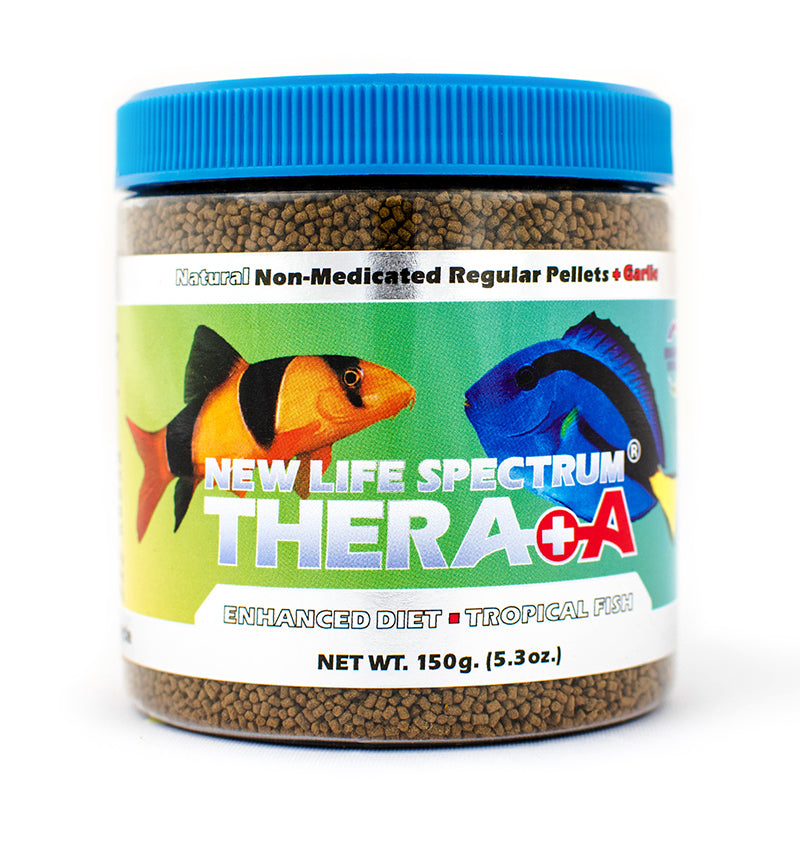
NEW LIFE SPECTRUM · 1 mm sinking pellet · all-natural, garlic
New Life Spectrum Thera+A Regular
A dense, all-natural sinking pellet that many keepers treat as a near-complete diet: high-quality marine proteins, natural colour enhancers and added garlic that fish find irresistible.
Read the review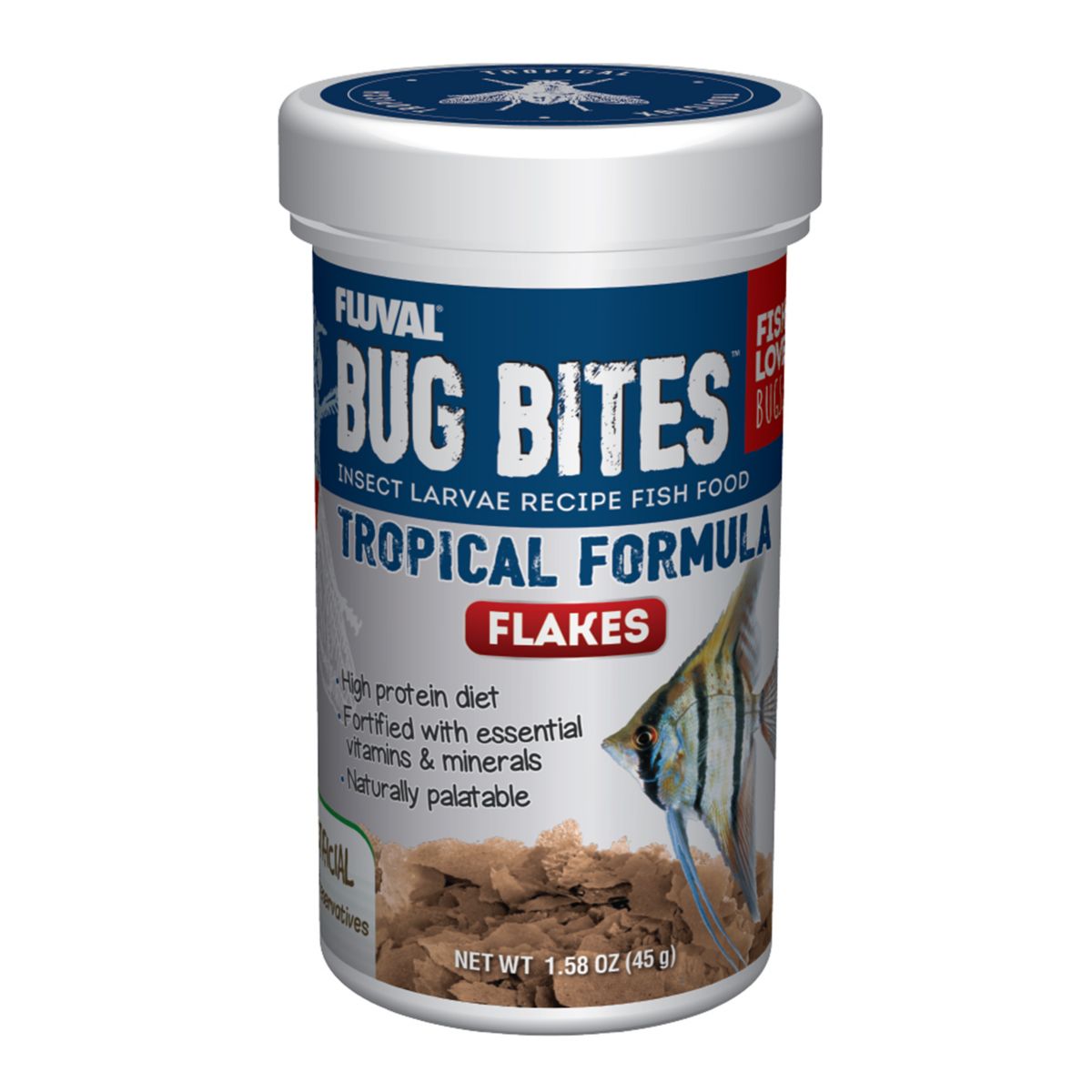
FLUVAL · staple tropical flake · insect-based
Fluval Bug Bites Tropical Flakes
An insect-larvae flake that works as a daily staple for most community fish — high protein, readily eaten and easy to portion, so it is our default everyday food.
Read the review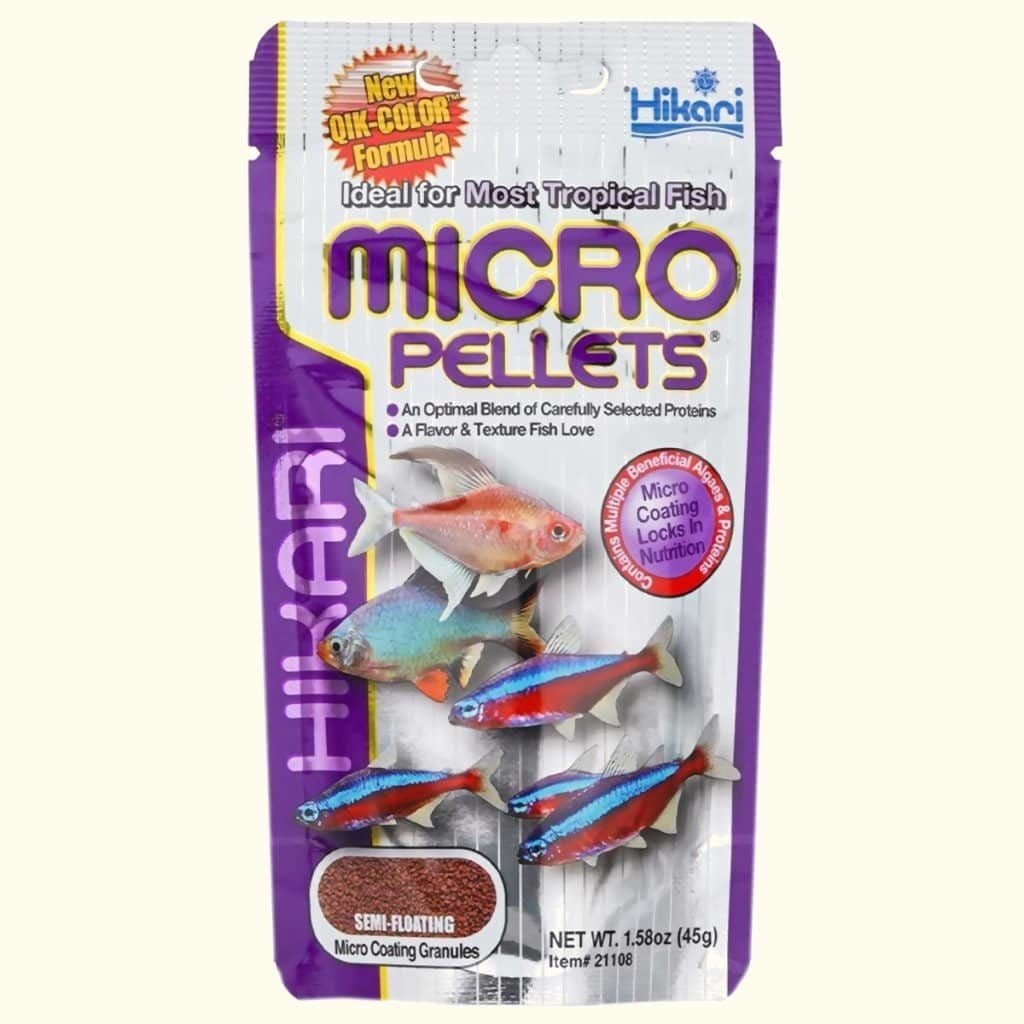
HIKARI · semi-floating micro pellet · small fish
Hikari Tropical Micro Pellets
A tiny, slow-sinking pellet sized for small mouths — great for tetras, rasboras and other nano community fish that struggle with bigger granules.
Read the review